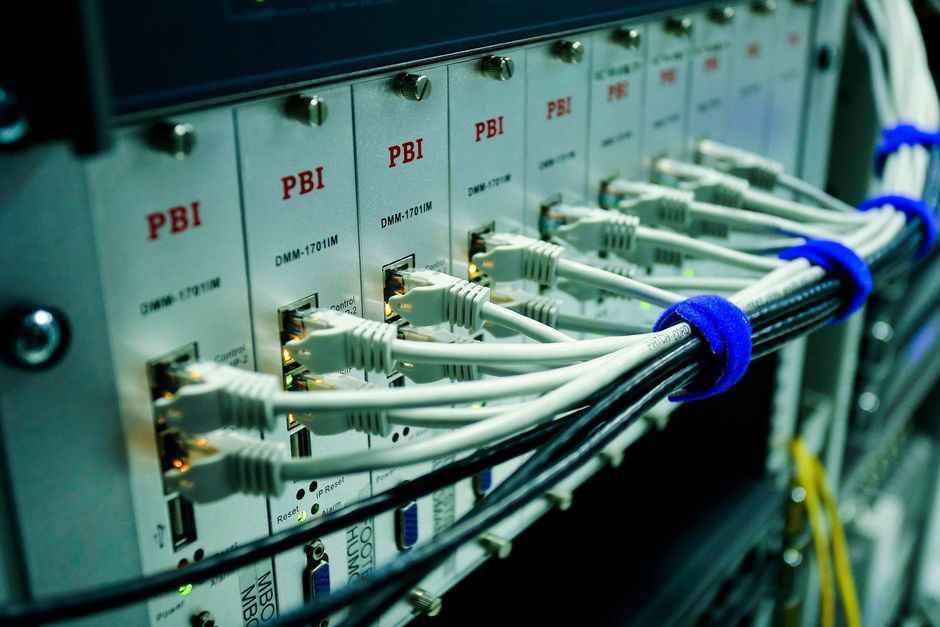
Firewalls and perimeter
Policy review, firmware currency, remote access rules, and segmentation so a compromised laptop does not reach everything on the network.
Business network support
Most network problems are not dramatic. They are a firewall three firmware versions behind, a switch nobody has logged into since it was installed, or wireless that was sized for half the current headcount. CoreData finds those before they become an outage.
Scope
Policy review, firmware currency, remote access rules, and segmentation so a compromised laptop does not reach everything on the network.
Managed switch configuration, VLANs, PoE for phones and cameras, and structured cabling that can be traced when something needs moving.
Coverage design and access point placement for offices, warehouses, and shop floors, including guest and device separation.
Secure connectivity for staff off-site, field crews, and contractors, with multi-factor enforcement rather than shared credentials.
Internet provisioning, secondary links, and automatic failover, so a single carrier fault does not stop the business for a day.
Device health, link state, and capacity watched around the clock. Most faults we act on are opened by monitoring, not by a phone call.
Inheriting a network
This is the most common way network support engagements start, and the first step is never a purchase order. It is finding out what is actually deployed.
Businesses are often surprised by how much of the network is undocumented and how much is past vendor support. Knowing which is which is what makes a replacement budget defensible instead of speculative.
Beyond the office
A lot of Calgary businesses run networks that reach well past head office. That is where generic support tends to stop.
Site-to-site connectivity, consistent policy across locations, and central visibility instead of each office running its own arrangement.
Environments where wireless has to cope with racking, metal, vehicles, and handheld scanners rather than desks and drywall.
Cellular and satellite-backed links for locations without fibre, and the field systems that depend on them staying up.
Industrial IT services →Common questions
Yes, and it is common. The first step is documenting what is actually deployed — inventory, firmware, configuration, and support status. Nothing is replaced before that picture exists.
Monitored devices alert continuously rather than waiting for someone to report a problem. In practice most network tickets are opened by monitoring before a user notices.
Yes. Firewall policy, segmentation, remote access controls, and firmware currency are part of network support, not a separate engagement.
Cybersecurity and continuity →Both. Equipment is specified to the requirement and the reasoning is documented, so you can see why a given firewall or switch was chosen over the alternatives.
Yes. Network monitoring and firmware management are frequently the first layers a business hands over while keeping everything else internal.
Co-managed and outsourced IT →Talk with our team
If nobody can answer that, a network assessment is the cheapest thing you will do this quarter.